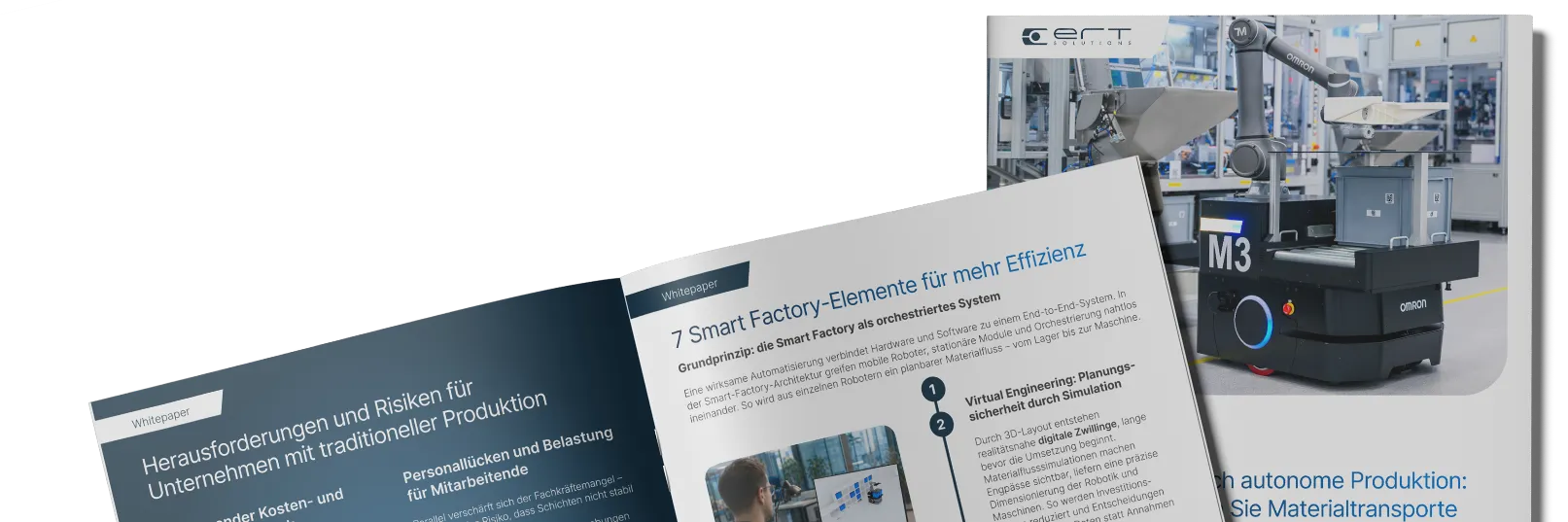
Free White Paper
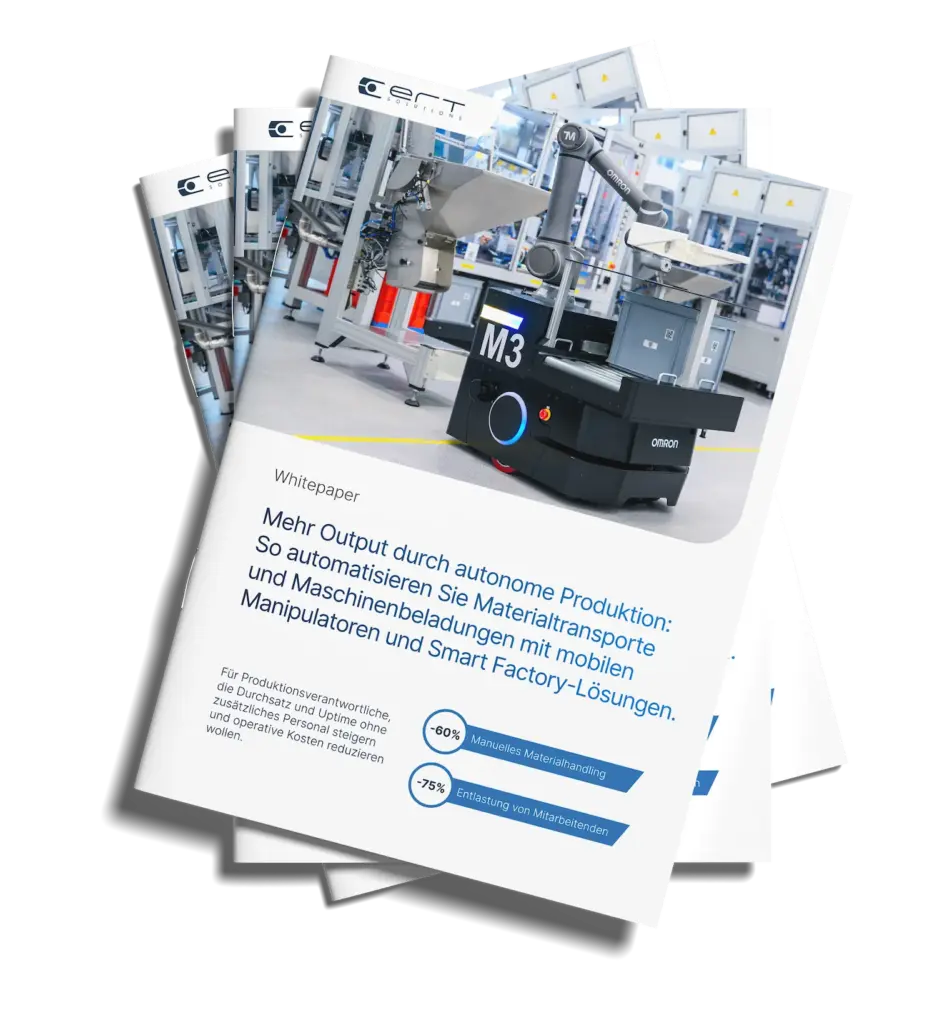
More output through autonomous production
For production managers who want to increase throughput and uptime and reduce operational costs. This free whitepaper shows how autonomous material handling, machine tending, and smart factory solutions can help achieve these goals.
✓ Less manual material handling
✓ Higher Machine availability
✓ More output without additional staff
WHY THIS WHITE PAPER?
Modern machines. Manual processes in between.
In many production environments, unnecessary bottlenecks still exist between warehouses, transfer stations, and machines. Find out where valuable output is being lost and how autonomous production can address this problem.
Manual material handling
Where additional transport, testing and handling processes are unnecessary time-consuming and increase the susceptibility to errors.
Tied up workers
What tasks still require skilled employees today and where automation can specifically relieve them of these tasks.
Unnecessary downtime
Why a non-continuous material supply can directly limit machine availability and output.
Too little transparency
Why missing process data often makes optimization potential in material flow invisible.
What you can expect in the white paper
From initial efficiency potentials to the connected smart factory, you will receive concrete insights into the key levers of autonomous production.
Recognizing potential
Where material handling, machine supply and a lack of transparency today cost productivity.
Rethinking material flows
How individual transport and delivery processes are transformed into a continuous automated workflow.
Machines provide the supply automatically
How material can be transported autonomously to the machine and the loading and unloading processes can be automated.
Connecting technologies intelligently
What role do mobile manipulators, transfer stations, robotics, and central control play in the overall system?.
Automating night shifts
What options automated material supply and lights-out production offer for night and off-peak times.
Making processes more transparent
How digital capture, centralized control, and better data utilization can targetly optimize material flows.
Reference · B. Braun
When more than 50 machines and processes work together autonomously.
In the ACTIVE production facility at B. Braun in Melsungen, medical disposable products are manufactured fully automatically. An automated warehouse, driverless transport systems, mobile manipulators, and digitalized orchestration ensure transparent and timely material flows. In total, more than 50 different machines and processes are autonomously connected to one another.
Smart Factory does not mean building everything
from scratch.
Automation can grow in a modular way.
Additional mobile robots, software, or machines can be flexibly integrated into existing production environments without completely changing existing structures.
- Continue to use existing structures
- Expand and scale modularly
- Integrate safety directly
SMART FACTORY SOLUTIONS
The right systems for the right processes
From material transport to process control: Find out which technologies are relevant for your challenge.
Virtual Engineering
How many robots or stations are actually needed?
How can investment risks be better assessed before the rollout?
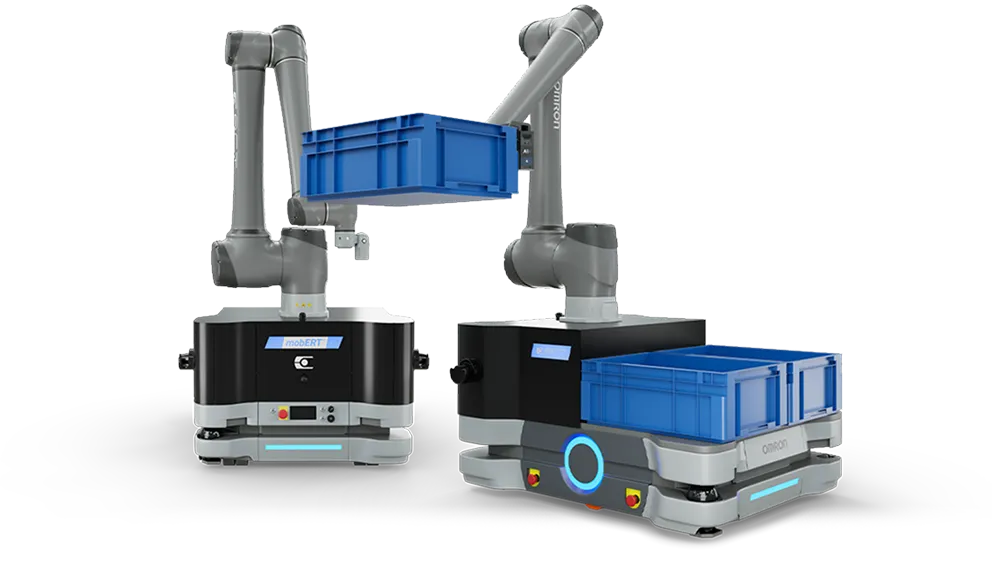
mobERT®
Is material still transported manually between the warehouse and the machine today?
Are there any delays because machines are waiting for supplies?
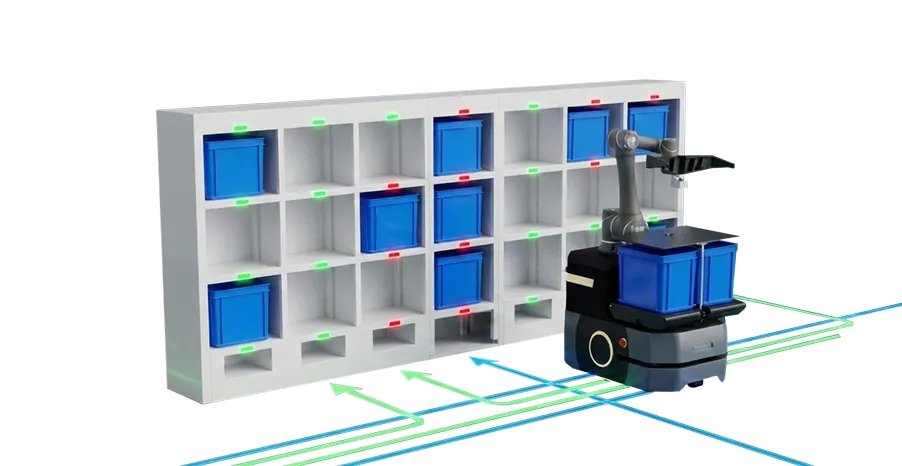
SmartShelf
Is there a clean handover between humans and automation?
Do you need buffers between individual production steps?
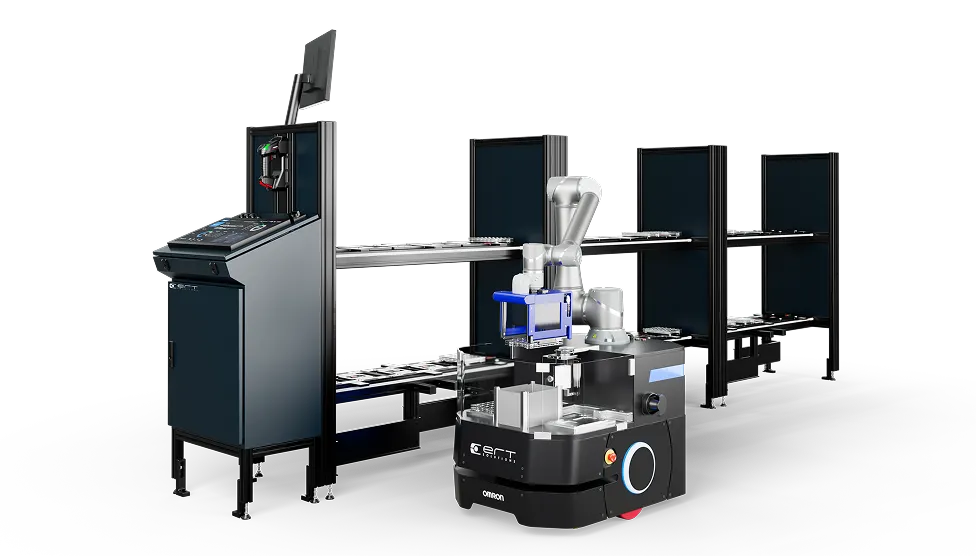
ERTmiral®
Do robots, warehouses and machines still work as isolated solutions?
Is there no central control and prioritization of the material flows?
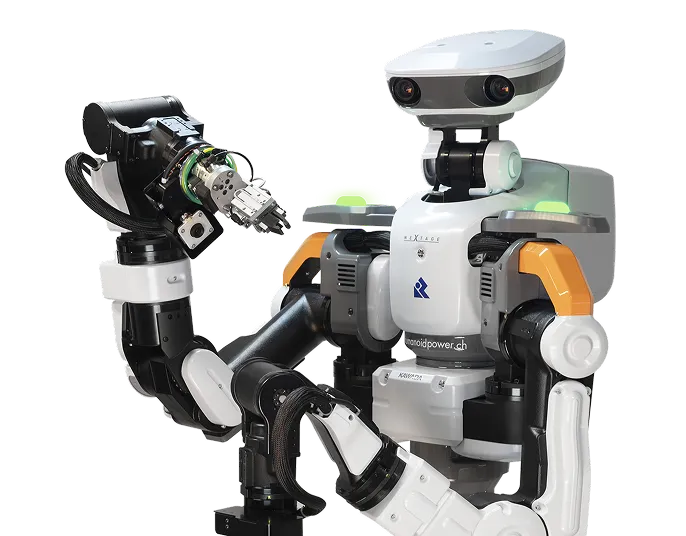
NEXTAGE
Do recurring assembly tasks involve qualified employees?
Are there any monotonous testing processes that could be reliably automated?
How much output is still left in your production?
Discover concrete Smart Factory approaches and practical automation possibilities for greater efficiency, uptime, and scalability. Learn how to increase throughput and uptime and reduce operational costs.