Automation Solutions for the Automotive Industry

Automobile manufacturers and suppliers often already have highly automated production lines, while material supply and ancillary processes are still carried out manually. That is exactly where „last-mile“ automation comes into play.

Automotive

High throughput, complex material flows

The automotive industry is characterized by fast production cycles, complex material flows, and increasing demands for flexibility, safety, and efficiency. Especially in existing plants, it is often not the core processes but the upstream and downstream material and handling processes that reduce productivity.

01

Inefficient material supply to the production line

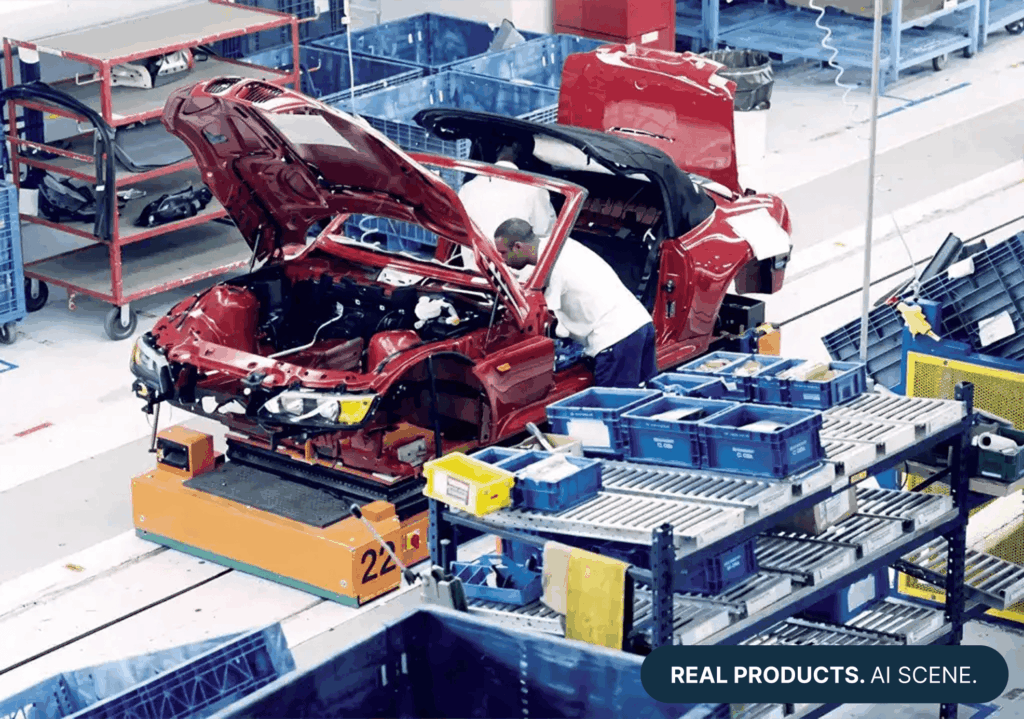
In vehicle and component production, KLT deliveries, parts feeding, and parts staging at assembly cells are often still done manually. This leads to interruptions, inflexible production cycles, and unnecessary wait times.

02

Skilled Labor Shortage in Logistics and Manufacturing

Repetitive transport and handling tasks tie up qualified employees, even though they could be deployed elsewhere in ways that add value. At the same time, the strain caused by monotonous and ergonomically demanding tasks is increasing.

03

Lack of Transparency in the Material Flow

Without centralized order management and traceability, real-time information on material movements, orders, and process status is often lacking. This makes it difficult to manage complex production environments.

04

Wide Range of Variants and Brownfield Complexity

A wide variety of variants and short product life cycles place high demands on flexibility. At the same time, new automation solutions must be efficiently integrated into existing environments.

Typical Applications

KLT / Tote Handling

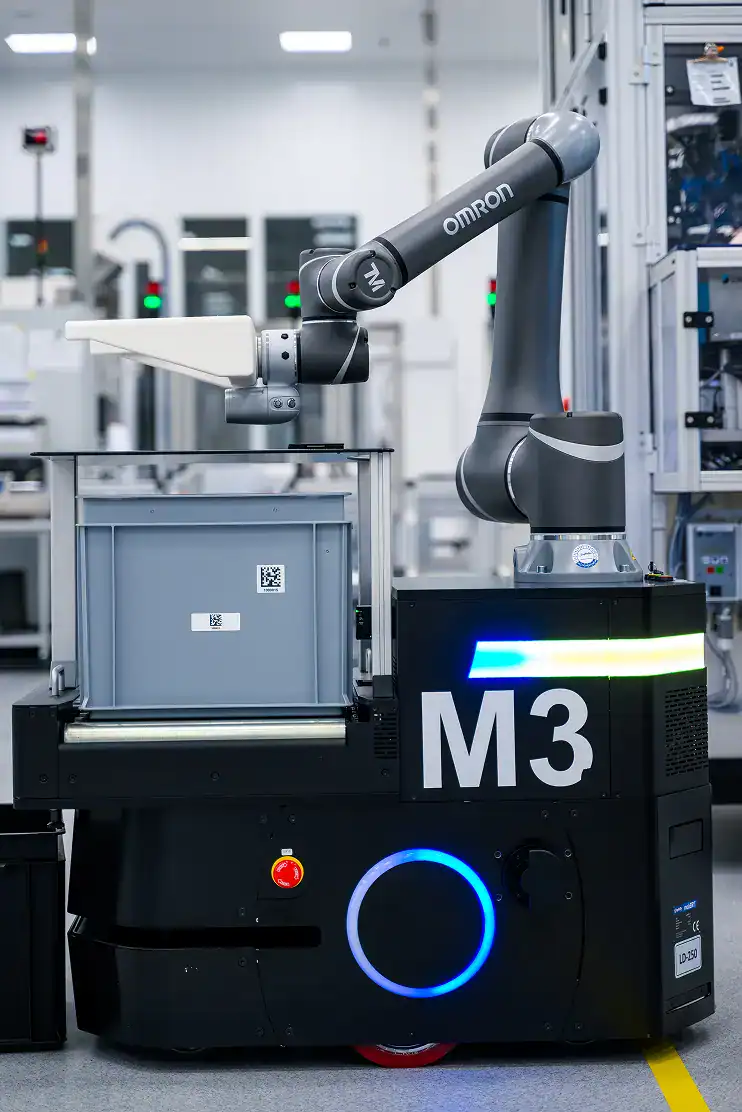
Automated loading and unloading of machines and cells: Mobile robots such as mobERT® handle the transfer of raw and finished parts between the warehouse, the assembly line, or the machine. Autonomous KLT / tote handling ensures stable processes and higher machine utilization.

Fleet Management

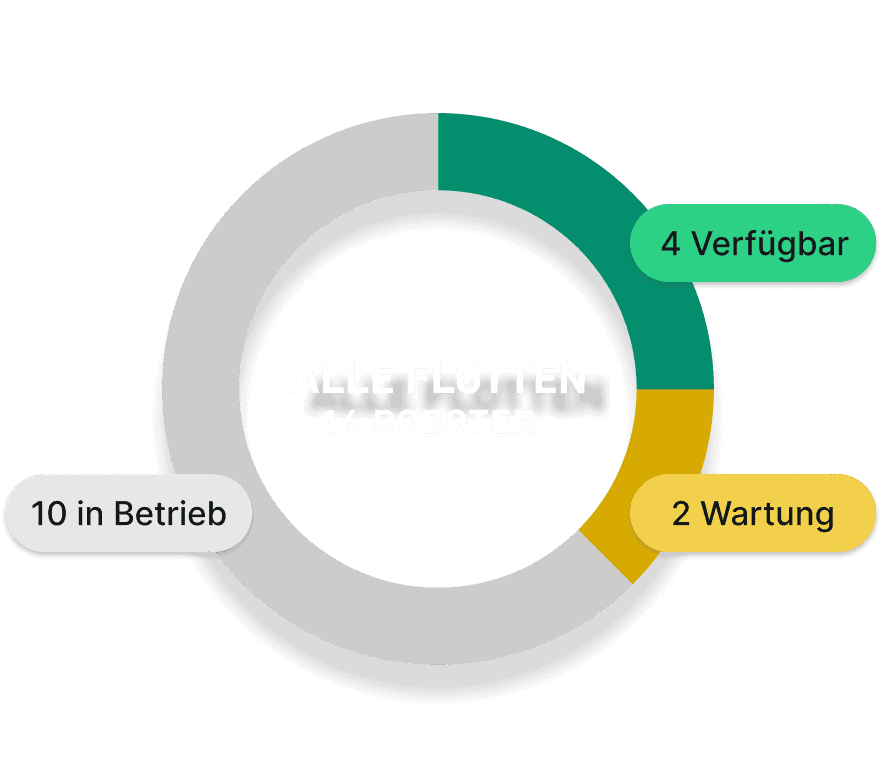
Centralized control of all material flows and automation processes: Transport orders are centrally planned, prioritized, and monitored in the ERTmiral® software. The result: maximum transparency, optimal resource utilization, and end-to-end production control.

Quality Control

Automatic transport of parts to the measuring machine ensures closed-loop quality control, resulting in consistently high quality with minimal labor requirements. 

Vision-Guided Robotics

Precise robot guidance for variable component positions: When workpieces, containers, or stations exhibit positional deviations, the VISIONSCANNER supports precise alignment and reliable process execution. This technology is also used in roll forming.

Automotive

Typical Smart Factory Products in the Automotive Industry

mobERT®

for autonomous material transport,
handling and machine tending

NEXTAGE

for precise, repetitive assembly and inspection tasks

Roller Hemming

Precise, robot-guided folding processes implemented cost-effectively

ERTmiral®

for efficient, centralized fleet and order management

Vision Scanner

Integrating camera-based quality assurance into the process

SmartShelf

An easy introduction to the
Smart Factory

Automotive

Key Benefits

01

Higher Line Availability via Autonomous Material Supply

Material shortages are reduced, and stoppages due to a lack of supplies are avoided.

02

Less manual transport
and less strain on employees

Monotonous and ergonomically taxing tasks are automated using mobile manipulators.

03

Scalable Automation for Brownfield Environments

Existing lines can be expanded gradually without the need for a complete redesign.

04

Higher transparency regarding orders, material flows, and process statuses

for better control and traceability.

05

Integration into Existing Systems and Future-Proofing

through open interfaces, modular architecture, and alignment with industry-wide standards.

06

Increased Output Without Additional Staff

Autonomous production times are extended, while manual interventions decrease and staffing gaps are filled.

YOUR PATH TO AUTOMATION

Our Customers' Experiences

Start your journey toward increased efficiency and competitiveness.

0 %

Fewer manual material transport distances for employees

0 %

Fewer decisions for employees—fewer mistakes

0 %

Less manual handling of products - less effort, higher quality